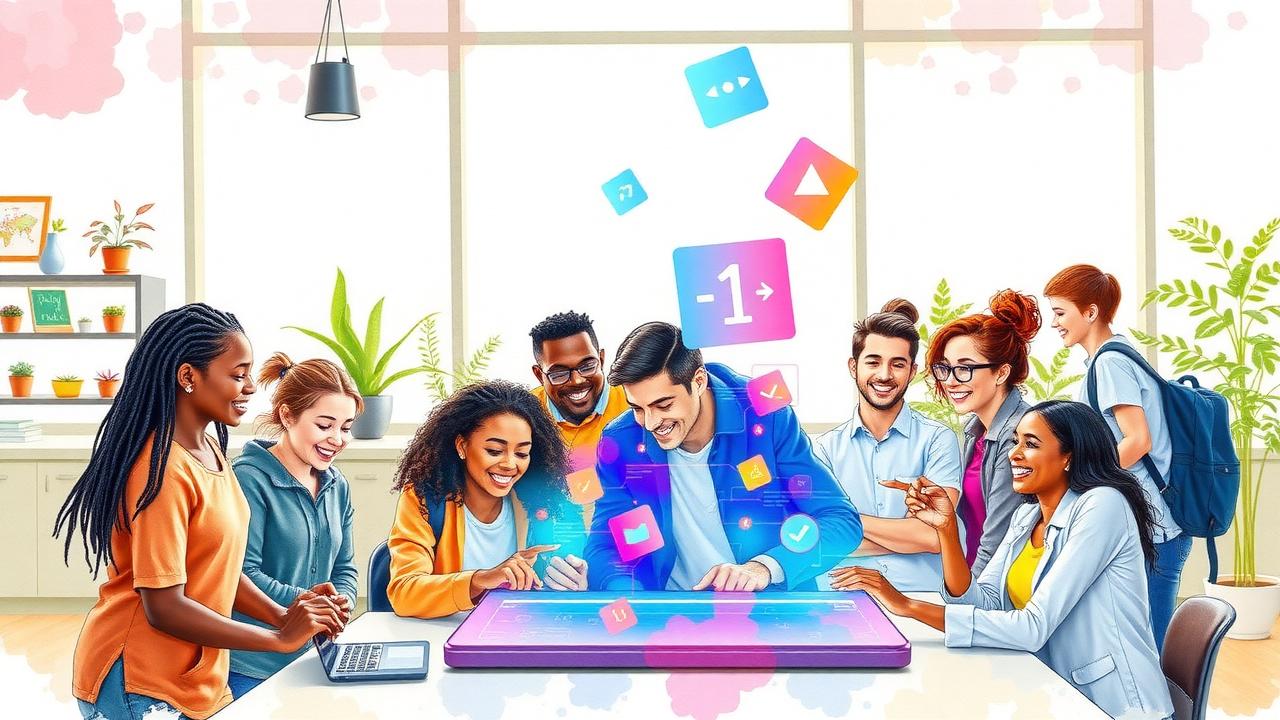
Vibe coding is changing how students learn to code in 2025, focusing on AI-assisted programming through plain language instead of complex syntax. This shift encourages creative problem-solving and helps students feel more like designers than traditional coders. By making programming more inclusive, vibe coding allows diverse learners to participate without prior technical knowledge. For the job market, it addresses a rising demand for developers by enabling non-technical folks, including entrepreneurs, to build software easily. However, challenges remain in assessing learning and ensuring all students have access to necessary tools and resources. Overall, vibe coding hints at an evolving future for education and technology.
Table of Contents
- What is Vibe Coding?
- How Vibe Coding Changes Learning
- Making Coding Accessible for Everyone
- Key Skills Gained Through Vibe Coding
- Job Market Trends for Developers
- Real-World Applications of Vibe Coding
- Challenges Facing Vibe Coding in Education
- The Future of Programming Education
- Frequently Asked Questions
1. What is Vibe Coding?

Vibe coding is an innovative approach that harnesses the power of AI to let users create software by expressing their ideas in natural language. Instead of needing to know complex coding languages, students can simply describe what they want, and the AI translates that into code. This method aims to make programming more intuitive, especially for beginners who may find traditional coding intimidating. By allowing students to visualize their projects more clearly, vibe coding enhances understanding and encourages creativity, as learners can focus on solving problems rather than wrestling with syntax.
Additionally, vibe coding fosters collaboration among students, as they can share and develop ideas without needing advanced technical skills. This inclusivity opens up opportunities for a diverse range of learners to engage with technology. It can also be applied across various subjects, promoting interdisciplinary learning and encouraging a hands-on approach where experimentation is valued. By bridging the gap between coding theory and practical application, vibe coding prepares students for future technological advancements, emphasizing adaptability and creative thinking.
2. How Vibe Coding Changes Learning
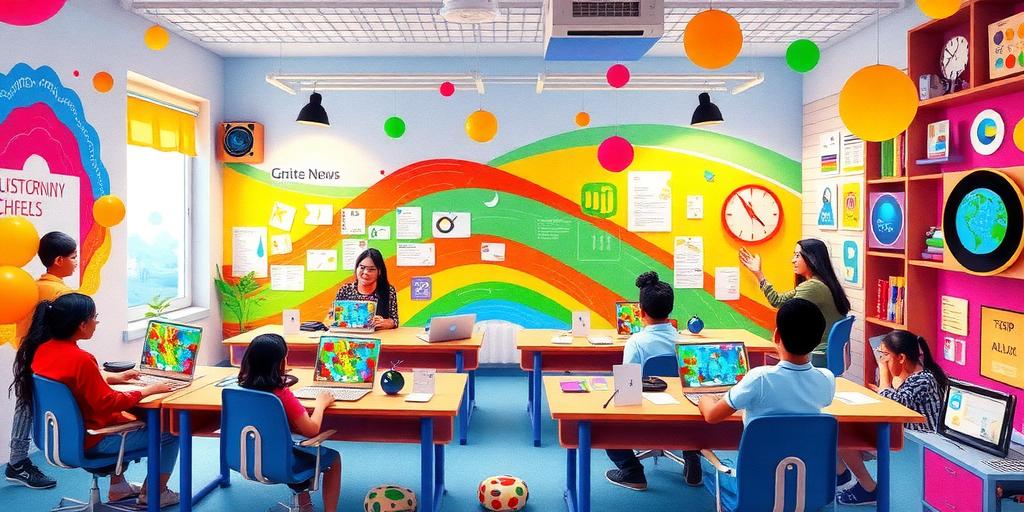
Vibe coding transforms the traditional learning model, encouraging active engagement instead of passive reception. Students are not just memorizing syntax; they learn to think critically about their ideas and how to express them for AI interpretation. This shift fosters a deeper understanding of concepts and logic, allowing students to grasp the fundamentals of programming without getting bogged down by complex syntax.
Additionally, vibe coding promotes a growth mindset. Mistakes are no longer seen as failures but as valuable learning opportunities. This approach helps students build resilience and confidence as they experiment and iterate on their ideas. Collaboration becomes essential, as students can work together on projects, sharing ideas and solutions, which enhances their learning experience.
Feedback loops are also improved, with AI providing instant responses to students’ queries and coding attempts. This immediate feedback helps learners adjust their approaches in real time, reinforcing their understanding. The playful environment created by vibe coding encourages experimentation, making the learning process more enjoyable and less intimidating.
As students see their ideas come to life, they develop greater confidence in their abilities. The integration of gamification into vibe coding makes the learning journey engaging, where challenges feel like fun puzzles to solve. Ultimately, vibe coding prepares students for real-world challenges by simulating a professional coding environment, equipping them with skills they will need in their future careers.
3. Making Coding Accessible for Everyone
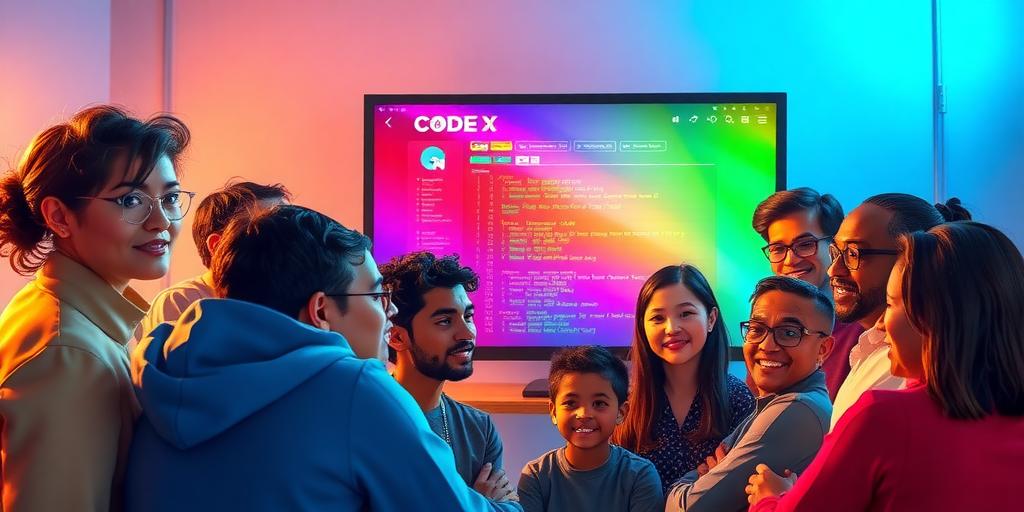
Vibe coding plays a crucial role in making coding accessible to everyone, especially students who may find traditional coding methods intimidating. By lowering the entry barriers, vibe coding encourages a wider range of learners, including those from non-technical fields, to engage with coding concepts. This approach allows students to express their ideas in natural language, removing the need for complex syntax and technical jargon. As a result, students can focus on articulating their thoughts rather than getting bogged down by coding intricacies.
Additionally, vibe coding aligns with various learning styles, which is essential in diverse classrooms. It promotes inclusivity, allowing anyone with an idea to participate in tech creation. Community programs can implement vibe coding, reaching underserved populations and enhancing digital literacy among younger generations. This increased access to coding education is vital, as it can lead to a more diverse tech workforce in the future. Educational institutions are already integrating vibe coding into their curricula, broadening participation and equipping students with the skills they need for future careers.
- Vibe coding lowers the entry barrier for those who may find traditional coding daunting.
- It caters to diverse learners, including those with different learning styles and backgrounds.
- Students from non-technical fields can comfortably engage with coding concepts.
- The use of natural language allows students to articulate their thoughts without technical jargon.
- AI tools can provide personalized learning experiences, catering to individual needs.
- Vibe coding can be implemented in community programs, reaching underserved populations.
- It promotes digital literacy among younger generations, equipping them for future careers.
- Educational institutions are integrating vibe coding into their curriculum to broaden participation.
- Increased access to coding education can lead to a more diverse tech workforce.
- Vibe coding fosters inclusivity by allowing anyone with an idea to participate in tech creation.
4. Key Skills Gained Through Vibe Coding
Vibe coding equips students with a variety of essential skills that are increasingly important in today’s tech-driven world. One of the key skills is effective communication with AI tools, allowing students to clearly articulate their needs and ideas. This clarity is crucial when interacting with platforms like ChatGPT or GitHub Copilot. Additionally, students learn to prototype ideas quickly, which significantly reduces the time it takes to go from concept to execution. This rapid prototyping fosters creative problem-solving, encouraging students to think outside the box and explore unconventional solutions.
Moreover, collaboration skills are enhanced through group projects and discussions, where students learn to work together and leverage each other’s strengths. Critical thinking also develops as they evaluate AI-generated outputs, helping students discern quality and relevance in their work. Adaptability is another vital skill, preparing students for the rapidly changing tech environments they will encounter in their careers.
As students manage their coding projects, they gain valuable experience in project management, learning to oversee tasks and meet deadlines. The emphasis on iteration and refinement promotes resilience, teaching them that failure is often a stepping stone to success. Vibe coding also encourages self-directed learning, allowing students to take ownership of their projects and pursue their interests. Importantly, the skills gained through vibe coding are transferable to various careers, not just those in technology, making it a versatile addition to their educational journey.
| Skill | Description |
|---|---|
| Effective communication with AI tools | Students articulate their needs clearly to AI systems. |
| Rapid prototyping | Students learn to quickly transform ideas into working prototypes. |
| Creative problem-solving | Emphasis on helping students think outside the box. |
| Collaboration skills | Developed through group projects and collaborative discussions. |
| Critical thinking | Students evaluate AI-generated outputs thoughtfully. |
| Adaptability | Preparation for fast-changing tech environments. |
| Project management | Gained through oversight of individual coding projects. |
| Iterative refinement | Emphasis on refining and iterating ideas. |
| Self-directed learning | Encouraged as students take ownership of their projects. |
| Transferable skills | Skills are applicable across various careers, beyond technology. |
5. Job Market Trends for Developers
The demand for developers is on the rise, driven by the ongoing digital transformation across various industries. In 2025, companies increasingly seek versatile developers who can adapt to new technologies. Vibe coding plays a crucial role here, as it allows more individuals to engage with coding, including those from non-traditional backgrounds like entrepreneurs and marketers. These individuals can now create tech solutions without needing extensive training in coding. According to projections, jobs in tech are expected to grow significantly, with a 25% increase in developer roles anticipated by 2032. Vibe coding skills align with this trend, as they enable students to effectively communicate with AI tools, which are becoming integral in development processes.
Employers are looking for candidates who can leverage AI in their work, making vibe coding increasingly relevant. The tech industry is evolving towards collaboration and cross-disciplinary skills, highlighting the importance of soft skills such as creativity and effective communication. Vibe coding prepares students for roles that demand both technical and creative thinking, as emerging positions may prioritize conceptual understanding over traditional coding expertise. This shift in the job market emphasizes the need for a new kind of developer, one who can innovate and think outside the box.
6. Real-World Applications of Vibe Coding
Vibe coding opens up numerous real-world applications that can significantly benefit students. For instance, with vibe coding, students can create websites easily, making web design more approachable for those without traditional coding skills. In the realm of game development, vibe coding allows students to design and build interactive experiences, sparking their creativity and keeping them engaged.
Additionally, vibe coding tools simplify the automation of data analysis tasks, enhancing productivity and allowing students to focus on interpreting results rather than getting bogged down in complex code. With these tools, students can also develop mobile applications without needing to master extensive coding languages, thus broadening their technological skill set.
In educational settings, vibe coding can lead to the creation of engaging tools that enhance learning experiences. Businesses can leverage vibe coding for rapid prototype development, which speeds up product launches and helps bring ideas to market faster. In healthcare, students can work on applications that address specific needs, contributing to advancements in the sector.
Nonprofits can use vibe coding to develop solutions that tackle social issues, increasing their impact in communities. The entertainment industry, too, can benefit from vibe coding, as it facilitates creative script and content generation. Finally, vibe coding enables the creation of real-time data visualization tools, which can serve various sectors, making information more accessible and understandable.
7. Challenges Facing Vibe Coding in Education
Vibe coding faces several challenges in the education sector. One major issue is assessing student understanding when AI generates code automatically, making it difficult to gauge how well students grasp the concepts. Additionally, equity and access become significant concerns, as not all students have the same level of access to technology and the internet, potentially widening the digital divide. Teacher training is also crucial since educators need to feel confident and competent in teaching vibe coding. There are ongoing concerns about the quality and reliability of AI-generated code, with skepticism about its potential to produce subpar results. Furthermore, students might become overly reliant on AI tools, which could hinder their ability to develop essential problem-solving skills. The integration of vibe coding into existing curricula requires careful curriculum development to ensure it aligns with educational goals. Some educators may resist adopting these new methods, preferring traditional teaching styles they are comfortable with. Technical support is vital to address any challenges that may arise with AI tools. There is also a risk of oversimplifying coding education, which may lead to gaps in foundational knowledge, while balancing creativity with technical skills remains a persistent challenge in vibe coding education.
8. The Future of Programming Education
The future of programming education is likely to be transformed by vibe coding. This approach, which emphasizes conceptual understanding over traditional coding skills, may redefine how students learn to program. Rather than focusing solely on syntax, curricula could prioritize abstract thinking, encouraging students to develop creative solutions to problems. As artificial intelligence becomes more integrated into education, new learning models may emerge, fostering collaboration among students. Instead of working in isolation, teams might tackle projects together, reflecting the collaborative nature of modern software development. As AI tools evolve, coding education will need to adapt, equipping students with the skills to work effectively alongside these technologies.
The emphasis in programming education may shift from individual proficiency to team-based outcomes. Educational institutions might explore partnerships with tech companies to ensure that their curricula remain relevant and aligned with industry demands. Continuous learning and adaptability will become essential traits for future programmers, as the landscape of programming education evolves to prepare students for a tech-driven world. This new focus on vibe coding and abstract thinking will likely cultivate a generation of students who are not only proficient in technology but also skilled in innovative problem-solving.
Frequently Asked Questions
What is vibe coding, and why should students care about it?
Vibe coding is a fun and creative approach to programming that helps students learn how to code through music and art. It’s great for students because it makes learning more enjoyable and helps them connect with technology in a meaningful way.
How does vibe coding prepare students for the future?
Vibe coding helps students develop skills like problem-solving and creativity, which are important for many jobs in the future. By learning to code in a fun way, students become more adaptable and ready for new technology.
Can vibe coding be done by beginners?
Yes, vibe coding is perfect for beginners. It usually starts with simple concepts that anyone can understand and gradually adds more complexity, allowing students to learn at their own pace.
What tools are used in vibe coding?
Vibe coding often uses software that combines coding with music and visuals. Programs like Scratch or platforms designed for musical coding are often used, making it accessible for students.
Is vibe coding only for computer science students?
No, vibe coding can benefit students from various fields, not just computer science. It’s useful for anyone interested in creativity, art, or even science, as it encourages thinking outside the box.
TL;DR Vibe coding is an AI-driven approach to software creation that allows students to express ideas in natural language instead of traditional coding. This method shifts learning from rote memorization to creative problem-solving and inclusive programming, making coding accessible to all. It equips students with vital skills for future jobs as the demand for developers rises. However, challenges such as assessing AI-generated work and ensuring equitable access remain. The future of programming education may focus more on abstract thinking than hands-on coding, merging technology with human creativity.
Comments are closed