In 2025, a comparison of Gemini 2.5 Pro and GPT-4 reveals distinct advantages for each AI model. Gemini 2.5 Pro, developed by Google and released in May 2025, surpasses GPT-4 in many performance metrics, showcasing an impressive score of 83% in GPQA evaluations compared to GPT-4’s mere 35%. The context window of Gemini allows for over a million tokens versus GPT-4’s limit of roughly 32,000 tokens. While they both handle various media types well, the cost differences are notable: Gemini costs about $1.25 per million input tokens while GPT charges $30. Overall, Gemini offers better value for complex tasks requiring extensive data processing.
Table of Contents
- General Overview of Gemini 2.5 Pro and GPT-4
- Key Performance Metrics of Both Models
- Context Window and Token Management Comparison
- Pricing Comparison for Gemini 2.5 Pro and GPT-4
- Speed and Throughput Analysis
- Capabilities and Modalities of Each Model
- Benchmark Performance Results
- Final Recommendation on AI Model Use
- Frequently Asked Questions
1. General Overview of Gemini 2.5 Pro and GPT-4

Gemini 2.5 Pro is Google’s latest AI model, launched on May 20, 2025. It focuses on enhancing AI capabilities, making it suitable for various applications such as chatbots and content generation. This model is designed with an emphasis on cost efficiency and performance, particularly in data-heavy tasks. On the other hand, GPT-4 was developed by OpenAI and released on June 13, 2023. It has garnered a strong reputation for its ability to understand context and generate coherent text, which has led to widespread adoption across many industries. Both Gemini 2.5 Pro and GPT-4 utilize deep learning techniques to process and generate language, marking significant advancements in the field of natural language processing. With Gemini’s release strategically timed to compete with existing models like GPT-4, it reflects Google’s vision of seamlessly integrating AI into everyday tools.
2. Key Performance Metrics of Both Models
Performance metrics are crucial for evaluating AI models like Gemini 2.5 Pro and GPT-4. Both models are assessed based on their accuracy and the quality of their responses. Recent benchmarks indicate that Gemini 2.5 Pro has surpassed GPT-4 in several significant areas. For instance, in the GPQA metric, Gemini scored 83.0%, while GPT-4 only reached 35.7%. This suggests that Gemini has a superior ability to understand questions and context, which is vital for providing relevant answers.
In addition to accuracy, performance is also evaluated through speed and comprehension. While GPT-4 has a slightly higher throughput at approximately 104 tokens per second compared to Gemini’s 85 tokens per second, the cost efficiency and larger context window of Gemini make it appealing for more extensive tasks. User satisfaction ratings provide further insight into performance differences, with many users reporting favorable experiences with Gemini’s capabilities.
Performance can vary depending on the complexity of the tasks assigned to each model. For simpler queries, both models perform well, but Gemini’s edge becomes evident with more sophisticated requests. Continuous updates based on user feedback ensure that both models are improving over time, adapting to the needs of their users.
3. Context Window and Token Management Comparison
The context window size is a crucial aspect of AI models, as it determines how much information a model can process at any given time. Gemini 2.5 Pro features a significantly larger context window of 1,048,576 tokens, which allows it to manage longer conversations and more complex queries effectively. This larger capacity is particularly beneficial when dealing with detailed responses, as it can incorporate more context into its outputs. In contrast, GPT-4 has a smaller context window of 32,768 tokens. This limitation may hinder its effectiveness during extensive dialogues, where retaining context is essential for coherence and relevance.
Token management also plays a vital role in how efficiently both models process data. More tokens can enhance the accuracy of responses by providing richer context. Gemini’s design allows it to handle larger datasets without sacrificing coherence, making it a strong contender for applications requiring detailed interaction. On the other hand, both models employ different techniques for token management to optimize their performance, which can affect the overall speed of processing. For developers, the context window size is a key factor when selecting an AI model, especially for tasks that demand in-depth understanding and interaction.
4. Pricing Comparison for Gemini 2.5 Pro and GPT-4
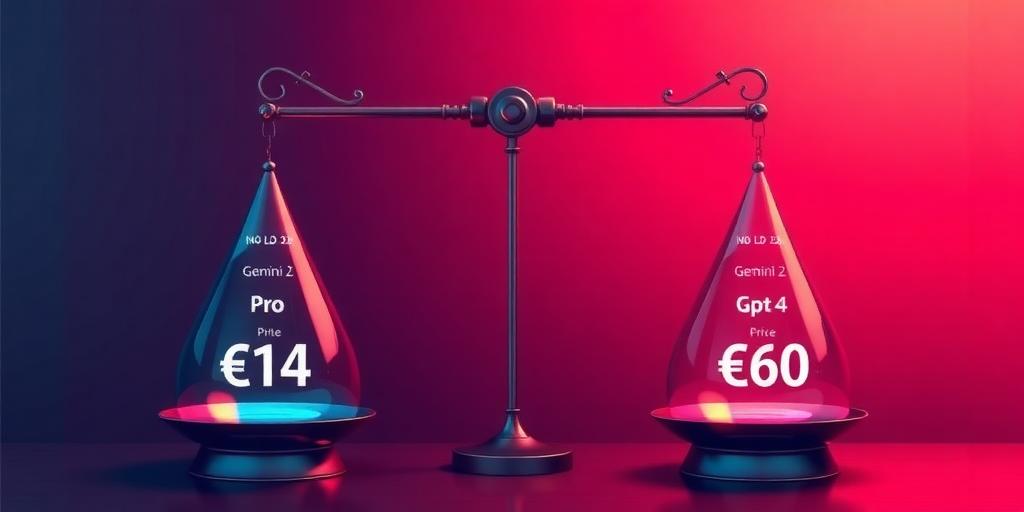
Cost plays a crucial role for businesses when selecting an AI model. Gemini 2.5 Pro provides competitive pricing that attracts startups and smaller companies looking to implement advanced AI without breaking the bank. In contrast, GPT-4’s pricing may discourage many smaller enterprises due to its higher costs. Both models have different pricing structures based on input and output tokens, which can significantly impact overall expenses. For instance, Gemini 2.5 Pro charges $1.25 per million input tokens and $10.00 per million output tokens, while GPT-4’s costs soar to $30.00 and $60.00 per million tokens, respectively. This difference results in an overall cost reduction of about 88% for Gemini compared to GPT-4. High-volume users can realize substantial savings with Gemini’s cost-efficient design. Therefore, businesses must consider both upfront and ongoing operational costs to evaluate which model fits their budget best. Transparent pricing is essential, allowing companies to plan their expenses effectively and make informed decisions about which AI model to adopt.
| Model | Input Token Cost | Output Token Cost | Overall Cost Efficiency |
|---|---|---|---|
| Gemini 2.5 Pro | $1.25 per million tokens | $10.00 per million tokens | 88% cost reduction compared to GPT-4 |
| GPT-4 | $30.00 per million tokens | $60.00 per million tokens | Not as cost-effective for high-volume users |
5. Speed and Throughput Analysis
Speed is a critical factor for real-time applications such as chatbots and interactive tools. In this context, Gemini 2.5 Pro operates at a steady rate of 85 tokens per second, while GPT-4 boasts a slightly faster throughput of 104 tokens per second. This difference, though small, can be significant in applications where response time is crucial. However, it’s essential to balance speed with the complexity of tasks and the model’s capabilities. Higher speeds can enhance user experience in time-sensitive scenarios, especially in customer service and support environments. It’s worth noting that throughput rates can fluctuate based on the types of queries each model processes. Despite these variations, both Gemini 2.5 Pro and GPT-4 exhibit robust performance in managing large datasets efficiently. Ultimately, the choice between these models may depend on specific use cases and industry demands. Users are encouraged to test both models under their unique workload conditions to evaluate speed effectively.
6. Capabilities and Modalities of Each Model
Both Gemini 2.5 Pro and GPT-4 have the ability to process multiple types of inputs, which enhances their versatility for various applications. Gemini 2.5 Pro stands out for its exceptional multimodal processing, effortlessly integrating text, images, and audio. This means users can combine inputs, like pairing images with text, resulting in richer and more engaging interactions. On the other hand, GPT-4 is recognized for its strong capabilities in text generation and comprehension, making it effective for tasks focused primarily on written content. The multimodal features of both models open doors to a wider range of applications across different industries. Businesses looking to align these models with their needs should consider their strengths, as Gemini’s design effectively supports diverse media types, which can significantly enhance user engagement. Understanding how each model handles complex tasks across various domains can also influence user satisfaction and overall effectiveness. As both models continue to evolve, future developments may further expand their capabilities.
- Both models can handle multiple input types, enhancing versatility.
- Gemini 2.5 Pro excels in multimodal processing, integrating text, images, and audio seamlessly.
- GPT-4 is known for its strong text generation and understanding capabilities.
- Multimodal capabilities allow for a broader range of applications in various industries.
- Users can combine inputs like images with text for richer interactions.
- Gemini’s design supports diverse media effectively, enhancing user engagement.
- Both models are equipped to handle complex tasks across different domains.
- Capabilities in handling different input types can influence user satisfaction.
- Understanding the strengths of each model helps businesses align them with their needs.
7. Benchmark Performance Results
benchmark results shed light on the strengths and weaknesses of both Gemini 2.5 Pro and GPT-4. For instance, Gemini 2.5 Pro scores impressively in MRCR and AIME 2025, showcasing its advanced capabilities with scores of 93.0% and 83.0%, respectively. In contrast, GPT-4 shines in specific tasks like the AI2 Reasoning Challenge, where it achieved a remarkable score of 96.3%, demonstrating its strength in reasoning tasks. It’s important to note that the comparative benchmarking results can vary based on the type of tasks or datasets used for evaluation. This variance helps users understand which model might be more suited to their specific needs. Evaluating benchmark performance not only reflects real-world applicability but also informs decisions related to various applications. Both models are continuously tested against emerging benchmarks, allowing their performance to evolve over time. Additionally, user feedback often complements these benchmark results, providing a more comprehensive view of each model’s capabilities. Regular updates and improvements can shift benchmark standings, making it essential for users to stay informed about the latest performance metrics.
8. Final Recommendation on AI Model Use
When choosing between Gemini 2.5 Pro and GPT-4, businesses should carefully consider their specific needs. Gemini 2.5 Pro is particularly suited for those who require extensive data processing and seek cost efficiency. It offers a significant reduction in operational costs, making it appealing for larger projects. On the other hand, GPT-4 is a strong choice for applications that demand nuanced text understanding, where its performance in specific areas might shine. Factors such as budget constraints, speed requirements, and task complexity all play a crucial role in the decision-making process. Both models have their strengths and weaknesses, and understanding these in relation to your intended applications is essential. User experiences can provide valuable insights, while conducting trials with both models may help clarify their suitability for your business. Moreover, aligning the choice with your long-term goals will ensure that you maximize the benefits of AI technology. Ultimately, the right model can significantly enhance your operational efficiency and effectiveness.
Frequently Asked Questions
What are the main differences between Gemini Pro and GPT-4?
Gemini Pro and GPT-4 differ in their underlying architecture, data training methods, and specific capabilities, which can affect how they perform in various tasks.
How does the performance of Gemini Pro compare to GPT-4 in real-world applications?
In real-world applications, performance can vary based on the context, but users report that each model has strengths in different areas, such as language understanding or generating creative content.
Can both models understand and process multiple languages effectively?
Yes, both Gemini Pro and GPT-4 support multiple languages, but their accuracy and fluency can differ depending on the language and specific task.
What types of tasks are each model best suited for?
Gemini Pro tends to excel in structured data analysis, while GPT-4 is often recognized for its conversational abilities and creative writing skills.
How do both models handle updates and improvements over time?
Both models receive regular updates from their developers, aimed at enhancing performance, fixing bugs, and expanding their capabilities, but the frequency and scale of these updates can differ.
TL;DR Gemini 2.5 Pro, released on May 20, 2025, outperforms GPT-4 in several key metrics, such as intelligence index and context window size. It offers a significantly larger context window of 1,048,576 tokens compared to GPT-4’s 32,768 tokens, along with lower costs for both input and output tokens, making it approximately 88% cheaper overall. While GPT-4 has a slightly faster throughput at 104 tokens per second versus Gemini’s 85 tokens per second, Gemini’s capabilities in handling diverse media and more recent training data may make it the better choice for applications requiring extensive data processing.
Comments are closed