
Claude AI is transforming various sectors by enhancing productivity and improving customer experiences. For example, Banglalink’s chatbot REN handles 95% of interactions, greatly benefiting young users in Bangladesh. In retail, Carrefour’s AI Scent Advisor suggests personalized wine picks to shoppers. In healthcare, CVS Health’s platform Health100 simplifies patient engagements effectively. On the manufacturing side, GE Appliances uses AI for better quality control. Furthermore, in finance, Albo employs chatbots to streamline banking operations efficiently. Even public services like NASA use AI for mission safety efficiency. These cases illustrate how Claude AI revolutionizes traditional processes and optimizes workflows across diverse industries in 2025.
Table of Contents
- Overview of Claude AI
- Customer Service Enhancements
- Retail and E-commerce Innovations
- Healthcare Applications
- Manufacturing and Industry Improvements
- Financial Sector Innovations
- Telecommunications Advancements
- Public Sector Innovations
- Creative and Media Applications
- Data Management and Insights
- Frequently Asked Questions
Overview of Claude AI
Claude AI, created by Anthropic, focuses on making artificial intelligence safe and user-friendly. It uses advanced machine learning techniques to improve its understanding of human language. The system learns from user interactions, becoming more effective over time by incorporating feedback. Designed to assist various industries, Claude AI automates repetitive tasks and offers valuable insights to help organizations operate more efficiently. It can be deployed in both cloud and on-premise environments, providing flexibility for different business needs. Privacy and data security are top priorities in its architecture, addressing common concerns associated with AI. Claude AI supports multiple languages, making it accessible to users worldwide. Its scalability enables businesses of all sizes to leverage AI capabilities effectively. Additionally, the platform includes tools for monitoring and managing AI performance, ensuring optimal results. Integration with existing software is straightforward, helping organizations adopt the technology with minimal disruption.
Customer Service Enhancements
 Credits: vecteezy.com
AI chatbots have transformed customer service by efficiently managing a high volume of inquiries at once. For instance, Banglalink introduced REN, a chatbot that handles 95% of customer interactions, significantly improving the experience for young users in Bangladesh. These AI systems continually analyze customer interactions to enhance response accuracy and relevance, leading to reduced wait times and increased satisfaction. Businesses now leverage AI to provide 24/7 support, ensuring customers receive assistance even outside regular hours. Natural language processing allows these chatbots to understand customer needs better, while sentiment analysis tools help gauge emotions, allowing for tailored responses. In situations where issues become complex, AI can seamlessly escalate matters to human agents, ensuring efficient resolution. Additionally, the data collected by AI provides valuable insights into customer behavior and preferences, which can inform proactive service strategies that address potential problems before they arise. Personalized interactions powered by AI foster stronger relationships, enhancing customer loyalty and retention.
| Company | AI Application | Impact |
|---|---|---|
| Banglalink | Launched REN, a chatbot managing 95% of customer interactions | Significantly enhancing user experience for millions of young users in Bangladesh. |
| Best Buy | Implemented a digital assistant | Facilitated faster customer service and improved satisfaction rates by reducing call times. |
| Liberty Global | Integrated Gemini models into Horizon TV platform | Resulted in enhanced responsiveness for content search and customer care. |
Retail and E-commerce Innovations
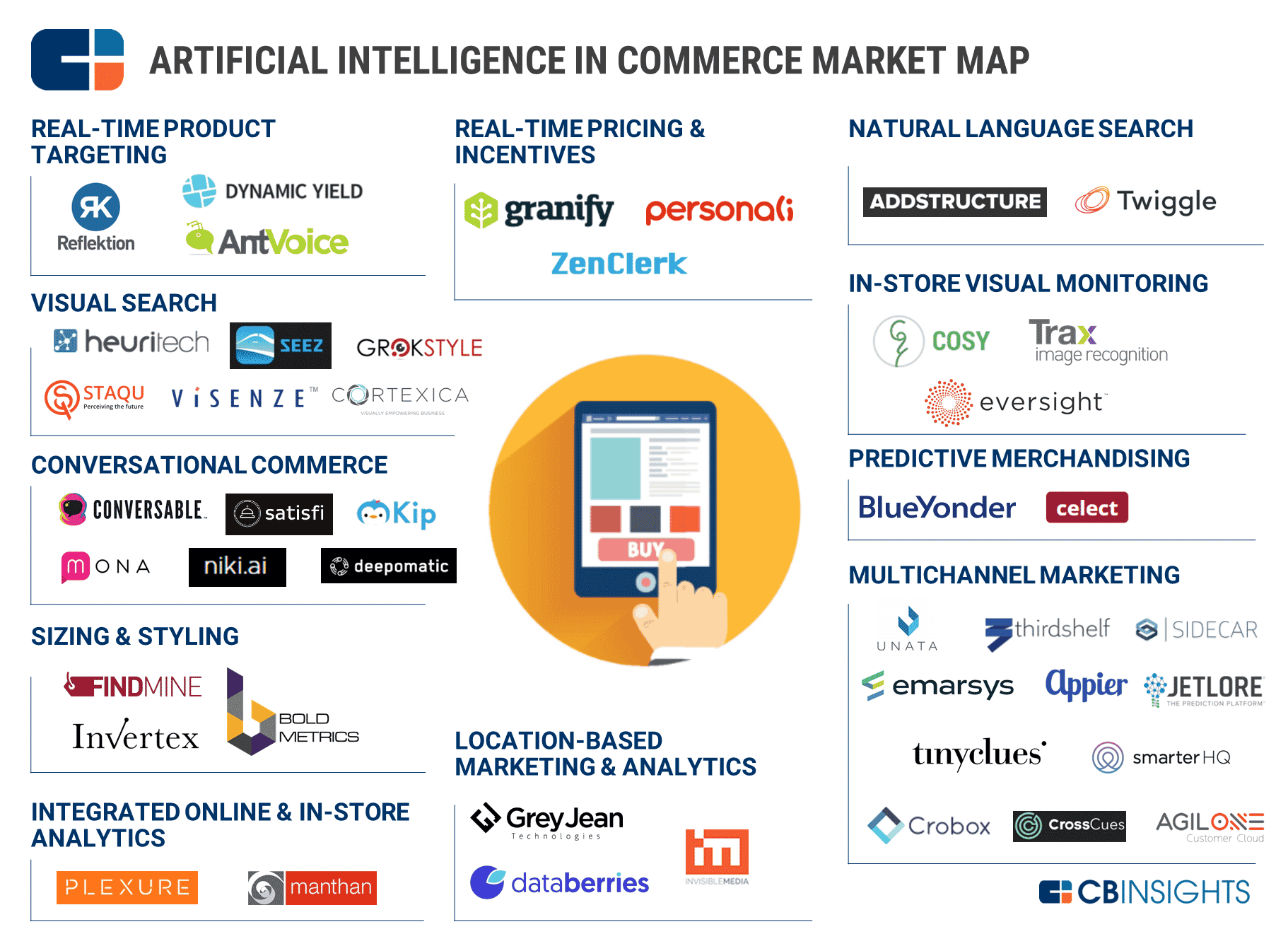 Credits: nanalyze.com
AI tools are playing a crucial role in transforming the retail and e-commerce landscape. For instance, they can analyze shopping patterns to optimize product placements and marketing strategies, ensuring that customers find what they need more easily. Personalized recommendations, driven by AI analysis, have been shown to significantly increase average order values, as customers are more likely to purchase items suggested based on their preferences.
Inventory management has also seen a boost from AI technology, as it automates tracking and forecasting, thus reducing stockouts and overstock situations, which can be costly for retailers. Additionally, chatbots powered by AI provide real-time assistance to customers, guiding them through the purchasing process and enhancing overall satisfaction.
AI-driven analytics allow businesses to identify the most effective promotions and discounts, ensuring that marketing efforts yield the best return on investment. Virtual fitting rooms, another innovation powered by AI, enhance the online shopping experience by allowing customers to visualize how products will look before making a purchase.
Moreover, AI can monitor and analyze competitor pricing, enabling retailers to adjust their strategies dynamically and stay competitive. Predictive analytics further help businesses forecast demand, leading to improved supply chain efficiency. On the loyalty front, AI enhances customer loyalty programs by offering tailored rewards based on shopping behavior, fostering stronger customer relationships. Finally, AI streamlines checkout processes, significantly reducing cart abandonment rates, which is a common challenge in online shopping.
- AI tools can analyze shopping patterns to optimize product placements and marketing strategies.
- Personalized recommendations based on AI analysis can increase average order values significantly.
- AI can automate inventory management, reducing stockouts and overstock situations.
- Chatbots can assist customers in real-time, guiding them through the purchasing process.
- AI-driven analytics can identify the most effective promotions and discounts.
- Virtual fitting rooms powered by AI enhance the online shopping experience for customers.
- AI can track and analyze competitor pricing, allowing retailers to adjust their strategies dynamically.
- Predictive analytics help businesses forecast demand, improving supply chain efficiency.
- AI can enhance customer loyalty programs by providing tailored rewards based on shopping behavior.
- AI can streamline checkout processes, reducing cart abandonment rates.
Healthcare Applications
 Credits: leewayhertz.com
AI is making significant strides in healthcare, enhancing various aspects of patient care and operational efficiency. For instance, AI systems can analyze patient data to identify health risks and propose preventive measures, potentially saving lives before problems escalate. Telehealth applications powered by AI enable remote consultations, which increase accessibility to healthcare services, especially for those in remote areas. In medical imaging, AI assists in analyzing scans, improving accuracy and speeding up diagnoses.
Moreover, patient management systems benefit from AI by streamlining appointment scheduling and follow-ups, reducing administrative burdens on healthcare providers. AI-driven tools also facilitate real-time health monitoring for chronic disease management, allowing for timely interventions. Natural language processing helps in analyzing clinical notes, extracting valuable insights that can inform treatment strategies.
The drug discovery process is also being transformed by AI, which can significantly reduce the time and cost associated with bringing new medications to market. Healthcare chatbots provide patients with immediate answers to frequently asked questions, thereby improving patient engagement. Additionally, AI helps identify patterns in patient responses to treatments, allowing for optimized care plans tailored to individual needs. By analyzing vast amounts of clinical data more efficiently, AI enhances medical research, paving the way for innovative treatments and improved patient outcomes.
Manufacturing and Industry Improvements
AI is transforming manufacturing by optimizing production schedules based on demand forecasts and resource availability. This leads to better efficiency and reduced costs. Predictive maintenance powered by AI helps prevent equipment failures, which minimizes downtime and lowers repair expenses. In addition, AI systems can monitor production quality in real-time, catching defects early and ensuring consistent product standards.
Robotic process automation further streamlines repetitive tasks, allowing workers to focus on more complex duties. Enhanced supply chain visibility through AI allows companies to allocate resources better and manage logistics more effectively. Machine learning algorithms analyze historical data to identify ways to improve process efficiency, significantly reducing waste.
Moreover, AI supports workforce training by offering personalized learning experiences tailored to individual needs, helping employees upskill more effectively. Real-time analytics provided by AI facilitate quicker decision-making on the production floor, ensuring that managers can react promptly to changing conditions.
AI also aids in product design by analyzing consumer feedback and market trends, allowing manufacturers to align their offerings with customer preferences. Additionally, AI-driven simulations can optimize factory layouts, improving workflow and enhancing safety throughout the production process.
Financial Sector Innovations
In the financial sector, Claude AI is making significant strides by enhancing various processes. For instance, AI can quickly analyze transaction data to identify fraudulent activities, improving security for both banks and customers. Chatbots, powered by AI, provide immediate assistance for customer inquiries, leading to a smoother banking experience. Furthermore, AI assists with credit scoring by evaluating a broader range of data points, resulting in more accurate assessments for loan approvals. Wealth management platforms are leveraging AI to deliver personalized investment strategies tailored to individual goals, making financial advice more accessible. Automated financial advisors, also driven by AI, offer cost-effective options for consumers seeking guidance. Additionally, AI-driven market prediction models are enhancing trading strategies and risk management, helping investors make informed decisions. Compliance processes are streamlined as AI monitors transactions for adherence to regulations, reducing the risk of penalties. Insights gained from AI analyses help financial institutions craft targeted marketing campaigns, improving customer engagement. Finally, AI tools can identify operational inefficiencies, optimizing processes within financial organizations, and even assist in creating personalized financial literacy resources for consumers.
Telecommunications Advancements
AI is making significant strides in telecommunications by automating network management, which helps cut operational costs while enhancing service quality. Predictive analytics plays a critical role, allowing telecom companies to anticipate network demands and optimize resource allocation effectively. AI-enhanced chatbots are also improving customer service by handling inquiries and reducing the workload on human agents. By analyzing call data, AI can boost network performance and enhance overall customer satisfaction. Real-time data analysis enables faster response times for network issues, ensuring minimal disruption for users. Furthermore, AI can create personalized service plans tailored to individual customer usage patterns. Voice recognition technology further enriches customer interactions during support calls. Additionally, AI can proactively identify potential system failures, preventing issues before they impact customers and ensuring uninterrupted service. Telecom companies are also utilizing AI to streamline billing and account management processes, while marketing strategies benefit from analyzing consumer behavior and preferences.
Public Sector Innovations
AI is making significant strides in the public sector by enhancing services and improving overall efficiency. For instance, predictive analytics allows law enforcement agencies to identify potential crime hotspots, enabling proactive measures to enhance public safety. Administrative processes are streamlined through AI systems, reducing wait times for citizens seeking government services. Natural language processing tools analyze public feedback, helping governments understand sentiment and improve services accordingly. Additionally, chatbots guide citizens through complex government resources, making navigation simpler and more efficient. In disaster response, AI aids in data analysis and resource allocation, ensuring timely and effective action. Predictive modeling is also being used in urban planning, helping cities analyze population growth and infrastructure needs. Data-driven decision-making is becoming the norm in policy formulation, allowing for more informed choices. Transparency in government operations improves with better data analysis and reporting, fostering public trust. Furthermore, automated systems enhance the efficiency of public transportation management, reducing delays and increasing reliability. AI also plays a crucial role in managing public health initiatives by analyzing health trends and optimizing resource distribution.
Creative and Media Applications
AI is making a significant impact in the creative and media sectors. For instance, it can assist writers by generating ideas and even drafting content, allowing for quicker and more efficient writing processes. Platforms like Spotify use AI to provide personalized content recommendations, which helps to keep users engaged and satisfied. Media companies can also automate video editing, saving both time and resources, while AI-driven analytics can help tailor marketing strategies based on audience preferences, improving the effectiveness of campaigns.
In the realm of music, AI can aid in composition by generating melodies and providing inspiration for artists. Furthermore, interactive storytelling experiences are being developed using AI, which engage audiences in innovative ways. AI is even enhancing visual effects production in films, streamlining workflows and making it easier to bring creative visions to life. By utilizing AI for content moderation, media platforms can create safer online environments by filtering inappropriate material, thus improving user experiences.
Data Management and Insights
AI has the capability to process large volumes of data quickly, providing valuable insights that can guide business decisions. By automating data cleaning and organization, AI improves the overall quality of data, ensuring that teams work with accurate information. Anomaly detection is another critical feature, allowing AI systems to identify potential issues within data sets that warrant further investigation. Moreover, predictive analytics empowers businesses to forecast trends, which aids in strategic planning and resource allocation. AI also simplifies data visualization, transforming complex information into understandable formats for stakeholders. With intelligent data management systems, teams can access data more efficiently, enhancing collaboration and productivity. For example, AI enhances customer segmentation analysis, enabling more targeted marketing efforts that can lead to increased engagement and sales. Additionally, AI streamlines data integration processes, effectively connecting disparate systems and ensuring seamless data flow. In terms of regulatory compliance, AI monitors data usage and access, helping organizations adhere to necessary guidelines. The real-time insights provided by AI drive proactive decision-making, allowing organizations to stay ahead in a competitive landscape.
Frequently Asked Questions
What industries can benefit from using Claude AI?
Claude AI can be used in various industries like healthcare, finance, retail, education, and marketing, helping organizations streamline processes and improve customer interactions.
How does Claude AI enhance customer service?
Claude AI enhances customer service by providing quick responses to inquiries, helping with problem solving, and offering personalized recommendations based on customer preferences.
Can Claude AI be used for data analysis?
Yes, Claude AI can analyze large amounts of data efficiently, helping businesses identify trends, make predictions, and inform decision-making.
How does Claude AI support marketing efforts?
Claude AI supports marketing efforts by creating targeted content, automating campaigns, and analyzing customer behavior to optimize strategies.
Is Claude AI useful in improving workplace efficiency?
Claude AI is useful in improving workplace efficiency by automating repetitive tasks, enabling teams to focus on more strategic activities and enhancing collaboration.
TL;DR Claude AI is revolutionizing various sectors by enhancing productivity and customer experiences. In customer service, companies like Banglalink and Best Buy have integrated AI chatbots to manage interactions and improve satisfaction. Retailers like Carrefour and Etsy use AI for personalized recommendations that boost engagement. In healthcare, tools from CVS Health and Northwell Health streamline patient interactions. Manufacturing firms such as GE Appliances leverage AI for operational efficiency. Financial institutions like Albo and Citi Wealth enhance client services with AI chatbots. Telecommunications advancements by Deutsche Telekom and Verizon focus on predictive automation and efficiency. Public sector applications include improving treatment access and processing services. Creative sectors are using AI for enhanced viewer engagement, as seen with NBC Universal and Spotify. Finally, organizations like Grupo Boticário utilize AI for better data management. Overall, Claude AI showcases its versatility and effectiveness across multiple industries.
Comments are closed