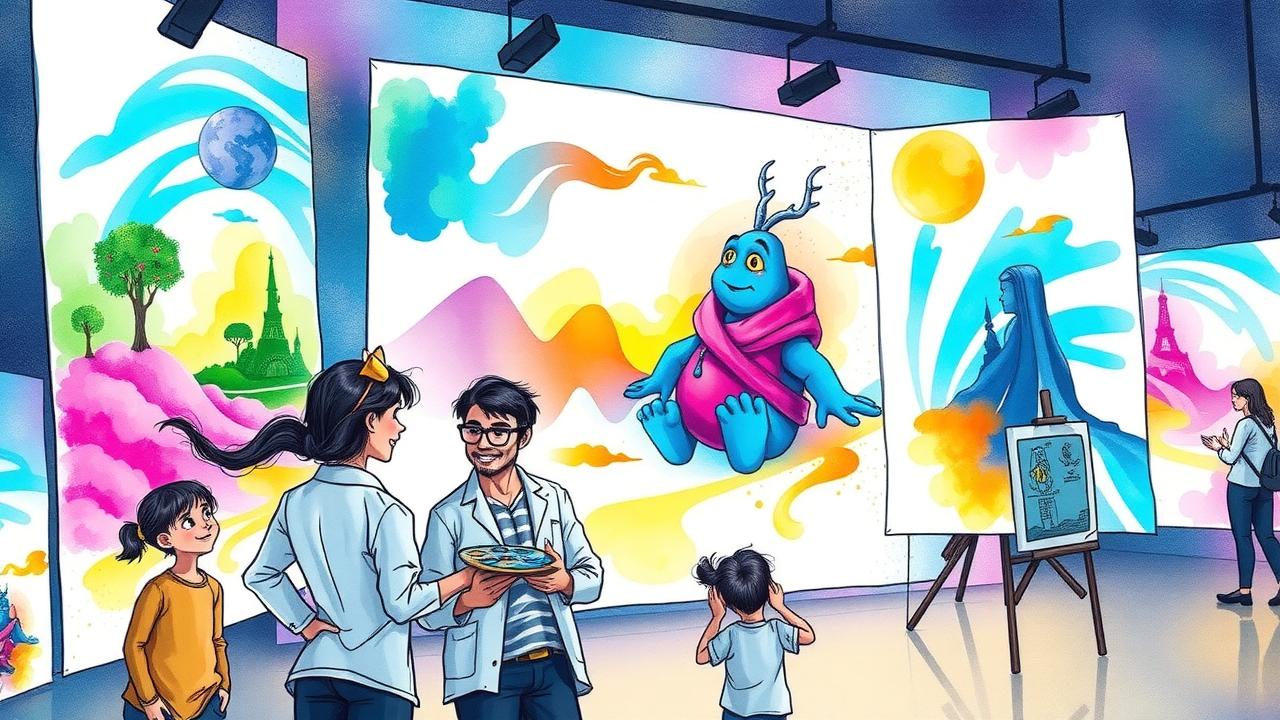
OpenAI’s GPT-4o model is set to change how we generate images in 2025. With its multimodal image generation features, users can create and refine images through interactive dialogue directly in ChatGPT. This model stands out by producing high-quality visuals with better context understanding compared to earlier versions like DALL·E. Key features include interactive editing, which allows users to adjust images iteratively, and excellent text rendering within images for practical applications. The uses are vast, from design and education to marketing and game development. However, challenges remain around ethical concerns and technical limitations that OpenAI is working on addressing as it continues to evolve this technology for broader creative applications.
Table of Contents
- Overview of OpenAI’s GPT-4o Image Generation
- Features of GPT-4o Model
- Creative Applications of GPT-4o
- Business Advantages of Using GPT-4o
- Challenges in Image Generation
- Future Trends in Image Generation
- Frequently Asked Questions
Overview of OpenAI’s GPT-4o Image Generation
OpenAI’s GPT-4o model marks a significant advancement in image generation technology. This model allows users to generate images from text prompts in real-time, blending conversation with creativity. Compared to its predecessor DALL·E, GPT-4o delivers higher quality and more realistic images, thanks to improved contextual understanding and text integration. Users can engage in interactive editing, providing initial prompts and refining images through dialogue, which enhances the creative process. The model can handle complex scenes with multiple objects while maintaining coherence. It also excels in embedding text within images, making it particularly useful for signage and infographics. With a user-friendly interface, GPT-4o caters to both professionals and amateurs. OpenAI has incorporated user feedback, ensuring continual model refinement. Furthermore, GPT-4o’s multimodal capabilities allow for a better understanding of both text and images. Its potential applications span various fields, including art, education, and marketing. OpenAI remains committed to ethical AI practices, focusing on responsible technology use.
Features of GPT-4o Model
The GPT-4o model comes with several advanced features that enhance image generation. One key aspect is interactive editing, which allows users to refine images through conversation, making the creative process more engaging. It can generate complex images with up to 20 distinct objects, all while maintaining coherence and detail. The model also excels in text rendering, embedding text accurately within images, which is useful for things like signage and infographics. Users can explore different art styles and themes, thanks to its versatility. Additionally, the model boasts quick generation times, enabling rapid prototyping and iteration. Its user-friendly prompts require minimal technical skills, making it accessible to a wide range of users. The advanced algorithms improve image quality and realism, while adaptive learning from user interactions enhances future outputs. Moreover, GPT-4o includes accessibility features that cater to diverse user needs, ensuring that anyone can harness its capabilities.
Creative Applications of GPT-4o
OpenAI’s GPT-4o model brings a range of creative applications that transform how individuals and businesses approach design and content creation. For instance, it allows for the rapid design of logos and branding materials. Users can generate multiple iterations quickly, making it easier to find the perfect look for their brand. In the educational sector, GPT-4o excels at creating educational graphics and visual aids, which help in simplifying complex concepts and enhancing learning experiences.
Game developers benefit from this technology as well, using it to assist in character and environment design. This can lead to more consistent and immersive storytelling within games. Social media content creation is another area where GPT-4o shines, generating tailored visuals that resonate with specific audiences, thus boosting engagement.
Moreover, authors and publishers can leverage GPT-4o to generate illustrations that complement their storytelling, making content more appealing and engaging to readers. Marketing campaigns see improvements as well, with GPT-4o producing eye-catching visuals that enhance advertisements and promotional materials.
Artists can find inspiration through this model, which helps in concept generation and exploring new styles. Additionally, GPT-4o supports the creation of virtual and augmented reality content, opening doors for more interactive and engaging experiences. E-commerce platforms also benefit from this technology by enhancing user experience through custom imagery that can attract customers.
Finally, small businesses find GPT-4o invaluable as it provides affordable design solutions that would otherwise be beyond their reach, democratizing access to high-quality visual content.
| Application | Use Cases | Benefits |
|---|---|---|
| Design and Branding | Rapid generation of logos, posters, advertisements | Customization and quick iterations |
| Education and Visualization | Creation of scientific diagrams, educational materials | Visually compelling and easy to understand |
| Game Development | Maintaining character consistency across design iterations | Enhancing storytelling and immersive experiences |
| Marketing and Content Creation | Generating tailored social media assets, promotional materials | High personalization |
Business Advantages of Using GPT-4o
Using OpenAI’s GPT-4o for image generation offers several business advantages that can significantly impact creative workflows. Firstly, it leads to substantial cost savings in visual content creation, potentially reducing expenses by 30-40% compared to traditional design processes. This efficiency allows businesses to allocate resources more effectively. Secondly, the model streamlines the production timeline, enabling faster marketing and product launches. By compressing visual development cycles, companies can respond quickly to market trends and consumer needs.
Furthermore, GPT-4o boosts productivity within creative teams. It empowers non-designers to produce professional-quality visuals, democratizing creativity across organizations. This capability fosters enhanced collaboration, as teams can share visual assets more easily. Personalized imagery generated through GPT-4o improves customer engagement, making marketing efforts more effective. Additionally, the model supports iterative testing and feedback in content development, allowing businesses to refine their visuals based on real-time insights.
Overall, integrating GPT-4o strategically can provide a competitive edge, enabling businesses to innovate in their visual communications and adapt to the ever-changing market landscape.
Challenges in Image Generation
As image generation technology advances, several challenges need to be addressed. Ethical considerations are paramount, especially concerning copyright infringement and violations of artistic rights. OpenAI has implemented safeguards to navigate these issues, but the risk remains. Technical limitations persist as well; for example, rendering complex scenes with high accuracy can be difficult. Moreover, issues arise with non-Latin script accuracy in text rendering, which can be problematic for global users. Consistent quality across various types of images is another challenge, as variations can lead to user dissatisfaction. Users often have expectations that exceed the current capabilities of the models, leading to potential frustration. Additionally, balancing creativity with realistic portrayals is crucial, as overly stylized images may not meet the needs of all users. Biases present in training data can also affect the outputs, reflecting societal prejudices in AI-generated images. Furthermore, the potential misuse of generated images for misinformation poses a significant risk, necessitating careful monitoring. Finally, continuous improvement of model performance is essential for real-world applications, ensuring that the technology evolves to meet user needs effectively.
- Addressing ethical considerations surrounding AI-generated content
- Mitigating risks of copyright infringement and artistic rights violations
- Handling technical limitations in rendering complex scenes accurately
- Overcoming issues with non-Latin script accuracy in text rendering
- Ensuring consistent quality across different types of images
- Dealing with user expectations versus actual output capabilities
- Balancing creativity with realistic portrayals in generated images
- Managing biases that may arise in the training data
- Navigating potential misuse of generated images for misinformation
- Continuing to enhance model performance in real-world applications
Future Trends in Image Generation
The future of image generation is set to change significantly as we see increased integration of AI tools in creative workflows. More professionals are looking for personalized and custom visual content, which opens up avenues for innovative applications. User interfaces are evolving to become more intuitive, allowing users to interact seamlessly with AI tools. New business models are emerging around AI-generated imagery, enabling companies to offer tailored services and solutions. Additionally, the use of AI in fields like virtual reality is expanding, creating immersive experiences that blend creativity with technology. A growing focus on sustainability is prompting creators to adopt eco-friendly practices in content production. Meanwhile, AI ethics is becoming paramount, with developers prioritizing responsible deployment to ensure fair use of generated images. Collaboration between AI developers and creative professionals is also on the rise, fostering environments where creativity can thrive. Trends in visual storytelling and interactive media are evolving, driven by advancements in algorithms that enhance accuracy and creativity, allowing for richer and more engaging content.
Frequently Asked Questions
What types of images can OpenAI generate?
OpenAI can create a wide range of images, including landscapes, characters, abstract art, and illustrations based on text descriptions.
How can artists use OpenAI image generation?
Artists can use it for inspiration, to create unique artwork, or even to generate elements that they can further refine in their own style.
Can OpenAI image generation help in marketing?
Yes, marketers can use it to create eye-catching visuals for social media, ads, and websites without needing advanced design skills.
Is OpenAI image generation easy to use?
Yes, it is user-friendly and allows anyone to create images by simply entering a description.
What makes OpenAI image generation special?
Its ability to understand natural language and turn it into detailed visuals makes it unique compared to traditional graphic design methods.
TL;DR OpenAI’s GPT-4o model enables interactive, multimodal image generation directly in ChatGPT, producing high-quality visuals with enhanced text integration. Key features include interactive editing, precision in complex scenes, and effective text rendering. Creative applications span design, education, gaming, and marketing, leading to significant cost savings and faster production times for businesses. While ethical concerns and technical limitations exist, ongoing improvements promise a bright future for image generation in various industries.
Comments are closed