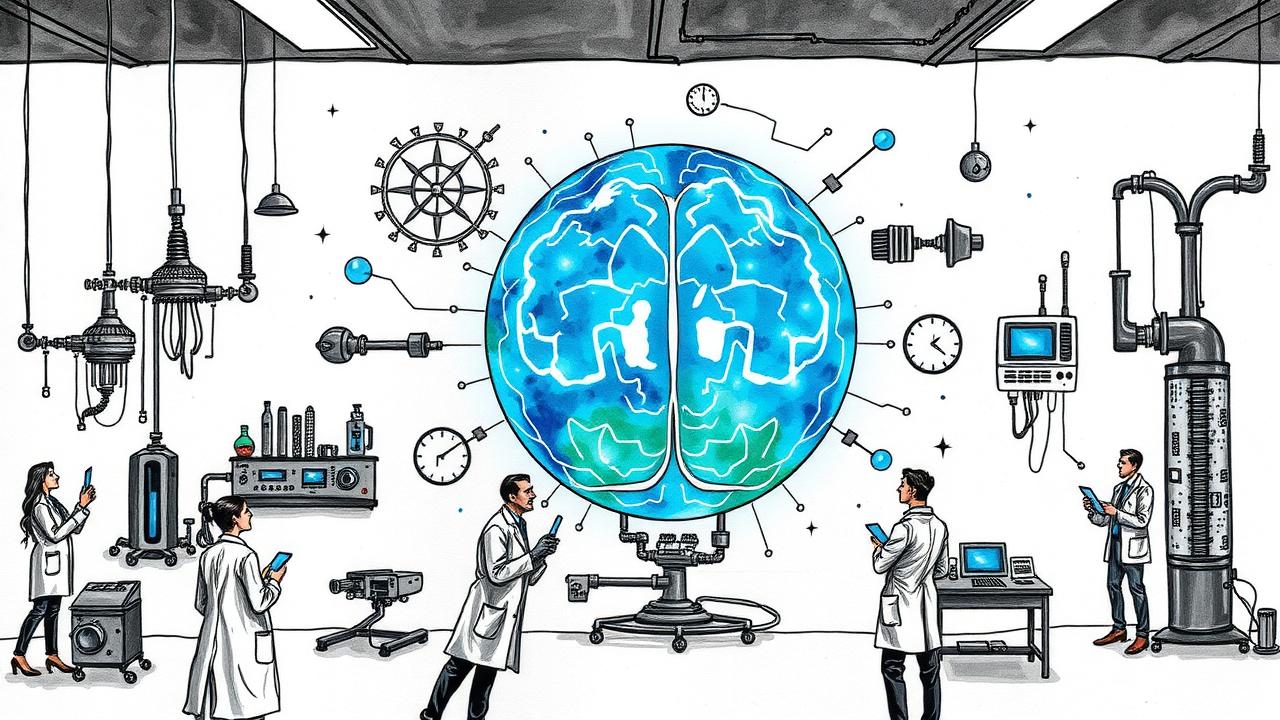
OpenAI’s advancements, like the GPT-5 model, have started reshaping how scientific research is conducted. These AI tools enhance productivity and collaboration by speeding up processes in fields such as biology and physics (Source: TIME). However, some experts express concerns that an over-reliance on these technologies may lead to lower quality submissions in academic journals and complicate peer review (Source: TIME). The balance between human expertise and AI support remains crucial as researchers worry about AI’s ability to generate new hypotheses. Moving forward, OpenAI aims for deeper integration of its models into scientific discovery while addressing these apprehensions about quality control (Source: TIME).
Table of Contents
- AI’s Impact on Scientific Research
- How AI Tools Change Collaboration
- Economic Growth Driven by AI
- Risks of Over-Reliance on AI
- Future of AI in Scientific Discoveries
- Balancing AI Efficiency and Human Insight
- Frequently Asked Questions
1. AI’s Impact on Scientific Research
AI is changing how scientists approach their work, especially in handling large datasets. With AI tools, researchers can analyze data more quickly and accurately than ever before. Machine learning models help identify patterns and make predictions that might be missed by human eyes. For instance, in fields like biology and chemistry, AI can process complex data sets that would take humans much longer to analyze. Additionally, AI-supported simulations allow researchers to experiment in virtual environments, testing hypotheses without the cost and time of physical experiments.
Natural language processing also plays a crucial role in streamlining the research process. By assisting with literature reviews, AI helps scientists find relevant studies and papers efficiently, saving valuable time. Moreover, AI can take over repetitive tasks, allowing researchers to focus on more creative and critical thinking aspects of their work.
Collaboration is another area where AI shines. AI systems can connect researchers worldwide, facilitating real-time knowledge sharing and teamwork. This global collaboration can lead to innovative solutions by bringing together insights from different fields. AI can even assist in drafting research proposals and grant applications, potentially increasing the likelihood of securing funding.
However, as AI continues to impact research, ethical considerations and transparency become vital. Trust in AI-generated outcomes is essential, and researchers need to ensure that AI tools are updated and aligned with the latest scientific advancements. While AI offers numerous benefits, it is crucial to maintain a balance between leveraging its capabilities and preserving the essential role of human insight in research.
- AI enhances data analysis, allowing researchers to process large datasets quickly and accurately.
- Machine learning models can predict outcomes and identify patterns that may not be visible to human researchers.
- AI-supported simulations enable researchers to test hypotheses in virtual environments before real-world experiments.
- Natural language processing assists in literature reviews, helping researchers find relevant studies and papers efficiently.
- AI can help automate repetitive tasks in research, freeing up time for scientists to focus on creative thinking and problem-solving.
- Collaborative AI systems can connect researchers across the globe, facilitating knowledge sharing and teamwork in real-time.
- AI tools can assist in drafting research proposals and grant applications, increasing the chances of funding success.
- AI-driven insights can lead to interdisciplinary approaches, merging insights from different fields to solve complex problems.
- Ethical considerations and AI transparency are critical to maintaining trust in AI-assisted research outcomes.
- Ongoing training and updates are necessary to keep AI tools aligned with the latest scientific advancements.
2. How AI Tools Change Collaboration
AI tools are reshaping collaboration among scientists by creating virtual environments that break down geographical barriers. Researchers can now work together seamlessly, regardless of their location, enhancing teamwork. These AI platforms facilitate real-time data sharing, allowing scientists to stay updated on each other’s progress and findings, which promotes a more integrated approach to research. Multilingual communication is another area where AI shines, enabling diverse teams to collaborate more effectively by overcoming language obstacles.
Moreover, AI assists in analyzing collaborative research data, ensuring that all voices are heard during discussions. This inclusivity fosters better decision-making and innovation. AI tools also track team contributions and manage project timelines, which helps promote accountability among members. By assessing individual skills and project needs, AI can suggest optimal team formations, ensuring that the right people are paired with the right tasks.
In case of conflicts, AI can analyze communication patterns to suggest improvements, helping teams navigate challenges more smoothly. Additionally, AI-driven insights can highlight potential areas for joint exploration, driving research forward. The publication process is also streamlined through AI, allowing teams to manage multiple papers simultaneously. Centralized repositories for shared resources make it easier for teams to access necessary information, further enhancing collaboration.
3. Economic Growth Driven by AI
The rise of AI technologies is reshaping economies across the globe. As businesses increasingly adopt AI, they find new ways to drive efficiency. This leads to lower production costs, allowing companies to offer goods and services at more competitive prices. In sectors like healthcare, tech, and finance, the demand for AI skills is creating a wealth of job opportunities, often requiring workers to develop new skills to keep pace with changing job roles.
Investment in AI startups is booming, with venture capital pouring into these companies at record levels. This financial backing not only fuels innovation but also contributes to overall economic growth. AI’s ability to analyze market trends enables businesses to make informed decisions, enhancing their competitiveness in the marketplace.
Moreover, the automation of tasks through AI is reducing operational costs for many firms. As companies save money, they can reinvest these savings into growth initiatives, further driving economic expansion. The integration of AI facilitates supply chain optimization, resulting in reduced waste and improved delivery times, which positively impacts profit margins. Enhanced customer service powered by AI also boosts customer loyalty and retention, contributing to sustainable revenue growth.
| Aspect | Description | Source |
|---|---|---|
| Job Opportunities | AI technologies are creating new roles across various sectors, including healthcare and finance. | ScienceDirect |
| Efficiency Gains | AI allows businesses to produce goods and services at lower costs, contributing to economic growth. | ScienceDirect |
| Investment Growth | Venture capital funding for AI startups has reached record levels, indicating strong market confidence. | ScienceDirect |
| Market Trends | AI’s ability to analyze market trends helps businesses improve competitiveness and decision-making. | ScienceDirect |
| Operational Cost Reduction | Automation through AI reduces costs, enabling reinvestment into growth initiatives. | ScienceDirect |
| Innovation | AI’s predictive capabilities lead to new products and services, fostering innovation. | ScienceDirect |
| Customer Service Improvement | Companies using AI experience enhanced customer service and retention rates. | ScienceDirect |
| Supply Chain Optimization | AI helps optimize supply chains, reducing waste and improving delivery times. | ScienceDirect |
| Job Role Reshaping | AI integration in industries is reshaping job roles, necessitating new skills and training. | ScienceDirect |
| Government Investment | Governments recognize AI’s economic potential, increasing funding for research and development. | ScienceDirect |
4. Risks of Over-Reliance on AI
Excessive dependence on AI can lead to researchers losing critical thinking skills, as they may lean too much on machine-generated insights. AI systems often produce biased results if trained on flawed data, which can mislead research conclusions. When researchers rely solely on AI-generated analyses, they risk overlooking important variables, limiting the depth of their findings. This over-reliance can also stifle creativity, as researchers might prioritize AI recommendations over exploring new and innovative ideas. Furthermore, there are serious concerns regarding data privacy and security when sensitive research data is processed by AI systems. A lack of understanding about AI’s limitations can result in misplaced trust in its capabilities, which may ultimately harm research integrity. AI-generated content may not always meet the rigorous standards required for academic publication, raising quality concerns. The potential for job displacement in research roles due to automation presents ethical questions about the future of work in academia. Additionally, regulatory frameworks may struggle to keep pace with rapid technological advancements, leading to possible misuse of AI. Lastly, AI systems require continuous maintenance and updates, which can be resource-intensive and may divert attention from core research activities.
5. Future of AI in Scientific Discoveries

AI is expected to significantly influence the future of scientific discoveries. One area where AI will shine is personalized medicine, where treatments will be tailored to individual patient profiles based on genetic data. This could lead to more effective therapies and better patient outcomes. Additionally, advancements in AI algorithms may revolutionize drug discovery, accelerating the identification of potential therapies and reducing the time it takes to bring new drugs to market.
AI’s predictive modeling capabilities could also uncover new materials with unique properties, which could have applications in various industries, from electronics to renewable energy. In environmental research, AI may assist scientists in developing sustainable solutions to combat climate change, analyzing vast datasets to identify patterns and propose effective interventions.
In astronomy, AI’s role could expand, aiding researchers in discovering new celestial bodies and phenomena that were previously undetectable. Furthermore, future AI models may generate new scientific hypotheses, pushing the boundaries of human knowledge and encouraging innovative thinking in research.
Collaborative AI systems could facilitate large-scale, multi-disciplinary research efforts, allowing scientists from different fields to tackle complex global challenges together. The integration of AI into education will also be crucial, as it will train the next generation of scientists to effectively utilize AI in their research endeavors.
Moreover, AI has the potential to democratize access to scientific knowledge, providing researchers in developing countries with the tools and resources they need to contribute meaningfully to global scientific discourse. However, ethical considerations will play a vital role in shaping the development of AI in research, ensuring that these technologies benefit society as a whole.
6. Balancing AI Efficiency and Human Insight
Maintaining a balance between AI and human input is essential for fostering innovation in research. As AI tools become increasingly advanced, training programs that teach researchers how to effectively use these tools will be crucial for maximizing their benefits. Collaborative approaches that involve both AI and human expertise can lead to more comprehensive research outcomes. Regular audits of AI systems can help identify biases and ensure they align with the goals of scientific inquiry. Encouraging a culture of critical evaluation will help researchers assess AI-generated insights more effectively. Interdisciplinary teams that include both AI specialists and domain experts can enhance the quality of research findings. Promoting transparency in AI algorithms can build trust and facilitate better collaboration between humans and machines. Researchers should be encouraged to question AI recommendations and apply their judgment based on their expertise. Policies that promote ethical AI usage in research will help ensure a responsible approach to technology integration. Celebrating the achievements of human researchers alongside AI advancements can foster a more balanced perception of their roles in scientific progress.
Frequently Asked Questions
What are OpenAI research breakthroughs?
OpenAI research breakthroughs are significant advancements or discoveries made by researchers at OpenAI in fields like artificial intelligence and machine learning.
Are scientists relying too much on AI in 2025?
The discussion about scientists relying too much on AI in 2025 centers around whether they depend on AI for research and problem-solving more than they should.
What potential risks come from overreliance on AI for research?
Potential risks include losing critical thinking skills, focusing too much on AI-generated results, and not fully understanding the limitations of AI.
How might scientists balance AI use and traditional research methods?
Scientists might balance AI use and traditional methods by using AI as a tool but maintaining their own analytical skills and research practices.
What is the future of AI in scientific research beyond 2025?
The future of AI in scientific research beyond 2025 could involve more collaboration between AI and scientists, leading to innovative solutions while still valuing human insight.
TL;DR In 2025, OpenAI’s advancements, particularly the GPT-5 model, are transforming scientific research by enhancing efficiency and collaboration across various disciplines. However, there are concerns about over-reliance on AI, which could lead to issues like low-quality research submissions. The economic impact of AI is evident, with significant market growth predicted, yet skepticism about AI’s ability to generate new hypotheses remains. Balancing AI’s efficiency with human insight is crucial as we integrate these technologies into the scientific process.
Comments are closed